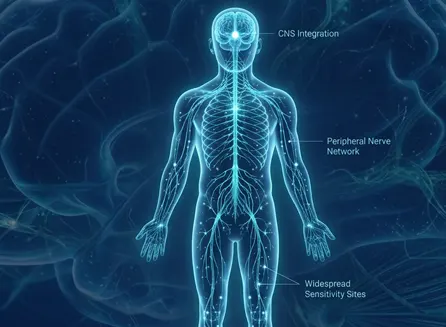
Fibromyalgia involves altered pain processing and nervous system dysregulation.
Reduce central pain amplification
Improve sleep quality
Support fatigue and cognitive symptoms
Programs are commonly integrated with movement therapy and pain education.
Fibromyalgia is a chronic pain condition characterised by widespread pain and tenderness, often accompanied by:
Persistent fatigue
Poor or unrefreshing sleep
“Brain fog” (difficulty with memory, concentration, or mental clarity)
Headaches or migraines
Sensitivity to touch, noise, light, or temperature
Mood changes such as anxiety or low mood
Importantly, fibromyalgia is not caused by damage to muscles, joints, or tissues.
Instead, it is now understood to involve changes in how the brain and nervous system process pain and sensory signals.
This is often referred to as central sensitisation.

In fibromyalgia, the nervous system becomes over-responsive:
This can explain why symptoms fluctuate, worsen with stress, poor sleep, or illness, and why scans or blood tests are often normal.
Because fibromyalgia is driven by nervous system dysregulation, neuromodulation is particularly well suited to this condition.
Neuromodulation aims to:
For many people, this can lead to gradual, meaningful symptom improvement.
While responses vary between individuals, neuromodulation may help with:
Improvements are often incremental rather than dramatic, but even small changes can significantly improve quality of life.
tDCS uses very low-level electrical stimulation through pads placed on the scalp. It may help by:
Sessions are painless and carefully monitored.
Focal Shockwave uses gentle acoustic pulses to influence deeper brain networks involved in pain, mood, and cognitive processing.
It may be considered to:
Focal Shockwave is delivered in short, structured treatment blocks.
tVNS stimulates the vagus nerve through the ear and plays a key role in fibromyalgia care.
It may help by:
This approach is especially valuable for people with high stress sensitivity or autonomic symptoms.
We prioritise clear and honest communication.
Does not eliminate symptoms overnight
Does not work the same for everyone
Often requires a series of sessions
Please contact us to discuss whether supportive neuromodulation may be helpful in managing fibromyalgia.