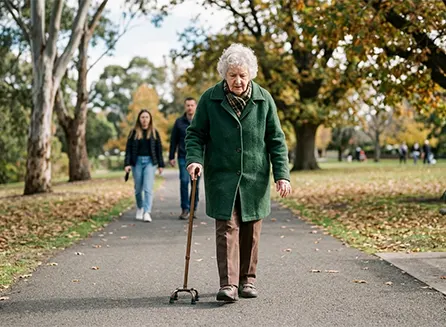
Parkinson’s disease affects both motor and non-motor brain networks, leading to tremor, rigidity, gait changes, cognitive impairment, and autonomic symptoms.
Modulating motor cortex and movement networks
Supporting executive and cognitive function
Addressing non-motor symptoms such as fatigue and autonomic dysfunction
Think of it like tuning a radio signal rather than forcing the brain to do something.
tDCS for motor and prefrontal networks
Focal Shockwave for deeper motor and cognitive circuits
tVNS for autonomic and non-motor symptom regulation
Programs are commonly integrated with movement therapy and rehabilitation.